Creating Your Own Espadrille Collection: From Idea to Production
Do you run a fashion brand, boutique or concept store and want to offer an espadrille collection under your own label? Perhaps you already have a sketch, a few inspiration photos or simply an idea. How do you turn that starting point into a collection you can actually sell? And do you really need to order thousands of pairs?
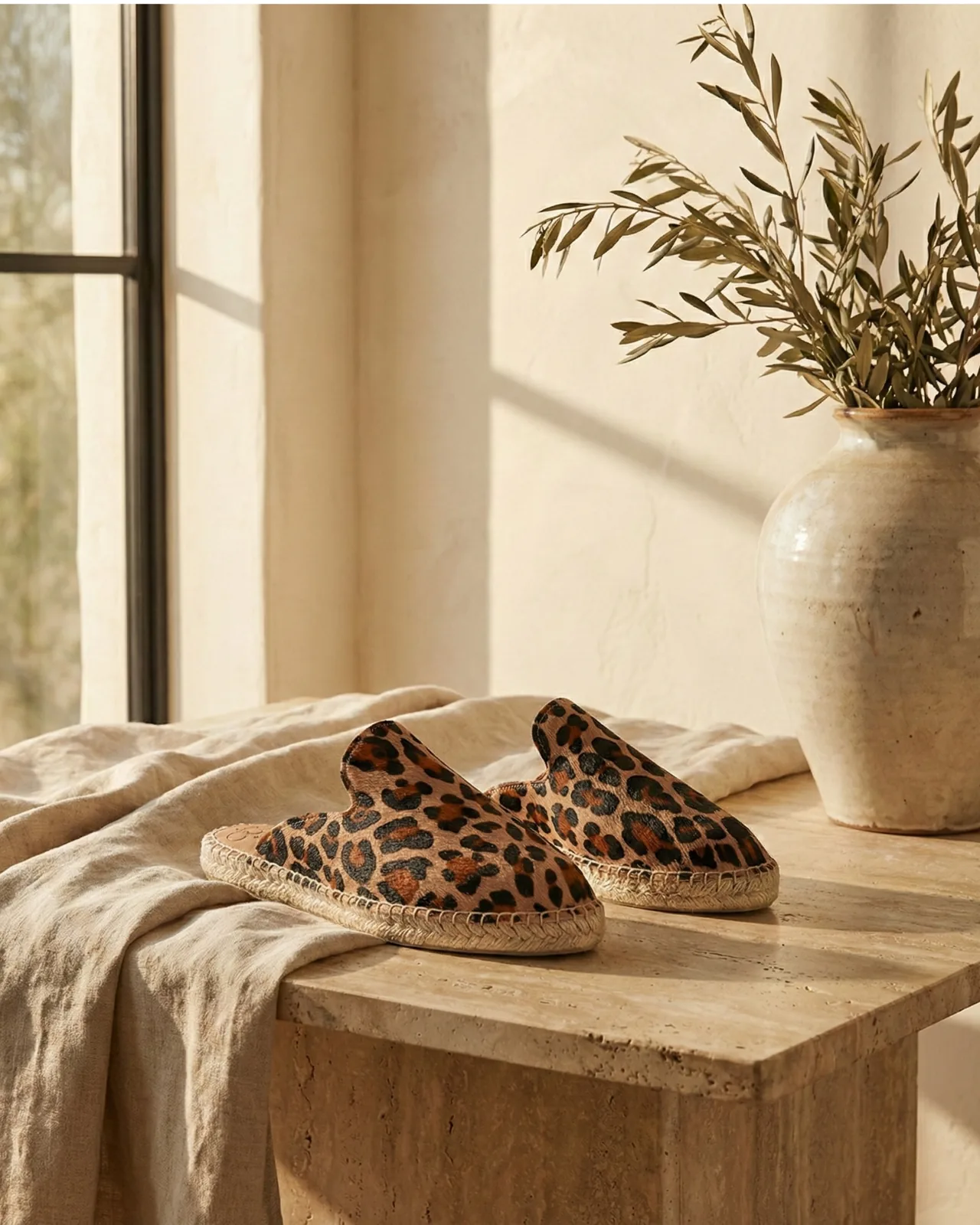
At Atelier COSTÀ, these are questions we know well. For more than ten years, we designed and sold our own espadrille collections. We chose the styles, materials and finishes, commissioned the first samples and followed production through to the finished shoes. Today, we use that experience to help brands and boutiques develop their own collections, including small production runs.
Can You Create an Espadrille Collection Without a Technical Drawing?
Yes. Some brands come to us with a specific design. Others have an idea, a few reference images or a material they would like to use. That is enough to start a conversation.
We begin by understanding your project and the customers your collection is intended for. It is a collaborative process: you share your ideas, and we suggest ways to make them work. Together, we look at what already exists, what can be adapted and what would need to be developed from scratch.
Over the years, we have built up a range of designs with patterns already developed. We can use these existing styles and personalise them with your choice of materials, colours and finishes. This allows you to create a collection that reflects your brand without starting from zero.
If you have a silhouette in mind that is not part of our existing range, we can also develop it with the independent footwear patternmakers we work with.
Existing Design or Bespoke Development: What Does It Mean for Your Budget?
This matters particularly when you want to produce espadrilles in small batches.
Developing a completely new shoe involves several stages: creating and refining the pattern, making the first sample, checking the fit, testing the design and sometimes making further adjustments before the style is ready. All of that work takes time and adds development costs.
When we start from an existing design whose pattern has already been developed, we avoid the cost of creating a new shape and much of the associated development work. We still need to choose the materials and finishes and check the personalised model. Using an existing pattern does not mean that every sampling cost disappears.
For an independent boutique or a young brand planning its first small collection, that difference can be significant. We explain both options from the outset so we can decide together what makes the most sense for the project.
How Can You Personalise Espadrilles for Your Brand?
Creating a personalised collection is about much more than adding a logo to a shoe.
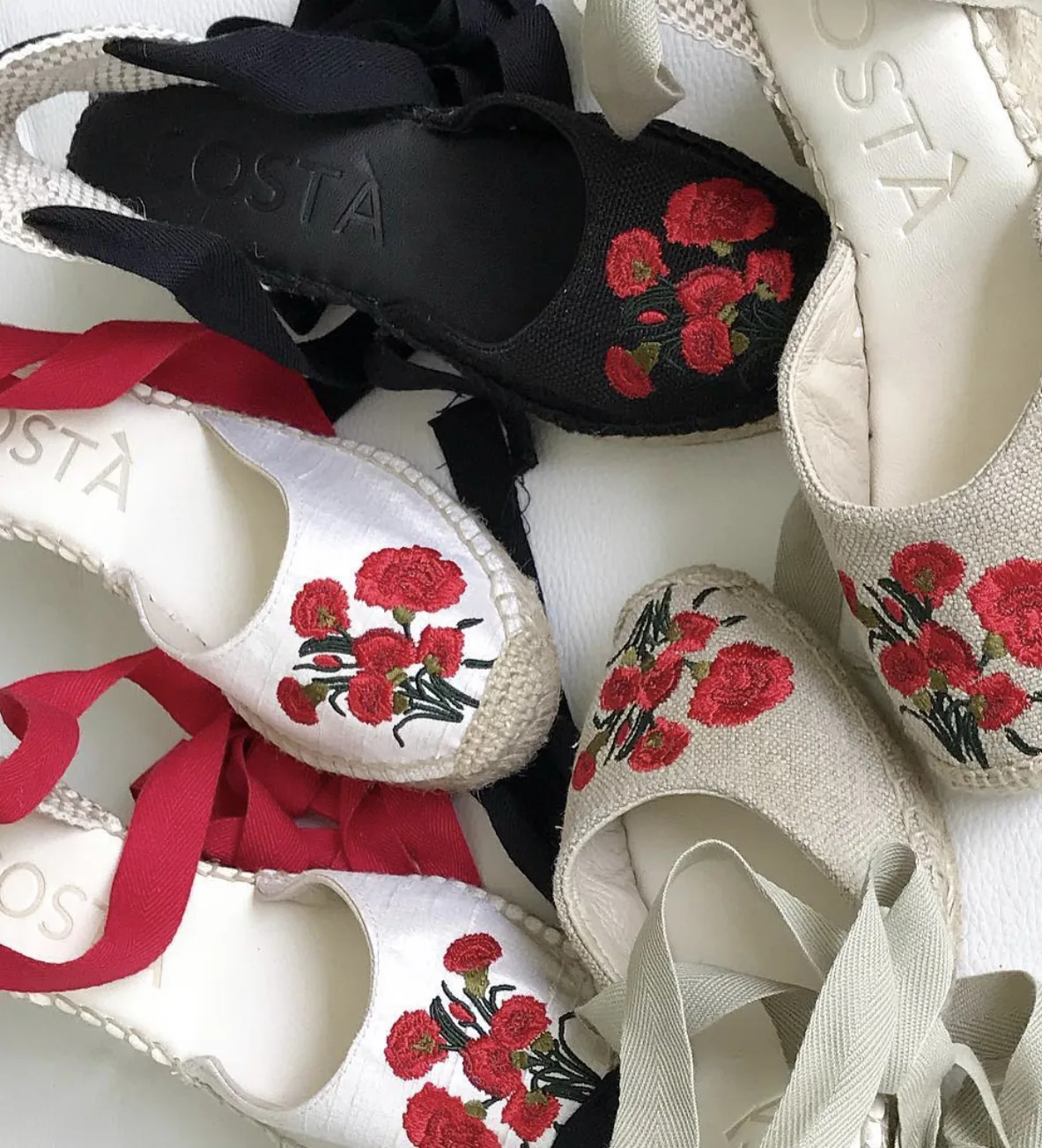
Starting with the same design, we can work with different materials, colour cards and finishes. Cotton canvas, linen, leather, suede, velvet and printed fabrics are just some of the options. Our suppliers also offer certified organic cotton, certified 100% recycled fabrics and vegan leather alternatives.
The same Mary Jane can look quite different depending on the material, buckle, grosgrain trim or stitching thread. On a loafer, plain and metallic leathers, or two-tone and three-tone combinations, can produce very different results. Depending on the style, a single or double jute sole can change its proportions too.
We can also source labels, branding details and packaging so that the finished espadrilles are presented under your own brand. This is the idea behind private label espadrille production, but for us it also means taking care with the materials and details that make the collection yours.
What Happens During Sampling?
Once the main choices have been made, we move on to sampling. How long this takes depends on whether we are adapting an existing style or creating a completely new one.
When we personalise one of our established designs, the process is generally much quicker. We may change the materials, colours or certain finishes, but the underlying shoe pattern stays the same.
A new design developed with our patternmaker takes more work. We need to make the first sample, try it on, check the fit, proportions and comfort, and make any necessary adjustments until we achieve the result we want.
Sampling also lets us see whether the materials and finishes work as expected. A colour may look different on the finished shoe than it did on the colour card. A buckle may seem too large, or a stitching detail may need changing.
Samples are paid for, and their cost depends on the work involved. Adapting one of our existing designs is generally less expensive than developing an entirely new model.
A sample also normally costs more per pair than a shoe made as part of a production run. Selecting a particular colour or material, preparing the components, applying individual finishes and making a single pair all take proportionally more time than carrying out the same operations across an entire production order.
The price of a sample is therefore not the future per-pair manufacturing price of the collection.
Once the first model is ready, we review it together and decide whether any final changes are needed before approving it for production.
Even when we are adapting an existing design, this check remains important to make sure everything matches the original choices.
Can a Boutique Have Espadrilles Made in Small Batches?
Would you like to launch an espadrille collection without ordering thousands of pairs? This is an important consideration for independent boutiques, concept stores and emerging fashion brands.
Our network of small specialist workshops in Spain allows us to explore personalised collections in small production runs, at quantities that can be more accessible than those required by many large industrial manufacturers.
The aim is not to offer as many variations as possible. A few carefully chosen designs, materials that suit your customers and colours that work well together can make a coherent collection.
Minimum quantities are not the same for every project. They depend on the style, materials and production requirements. We clarify these conditions before development begins, so that the proposed collection is realistic.
Where Can You Have Private Label Espadrilles Made in Spain?
Making an espadrille involves several different skills. Jute sole production, patternmaking, cutting, preparing the uppers, traditional stitching and finishing each require specialist knowledge.
We have worked with small, specialised workshops in Spain for more than ten years. We know their skills and the types of footwear each is best suited to making. Our role is to bring together the right specialists and coordinate the stages of the project, from the approved model to the finished collection.
This means a brand does not have to find and manage a separate workshop for every stage. We connect the original idea, the personalisation choices and the craftsmanship needed to make the shoes.
From Your Idea to Your Collection
We spent years developing our own espadrilles, comparing material colour cards, examining first samples and adjusting details before production. That experience taught us that a successful design depends as much on the decisions made at the start as on the craftsmanship that follows.
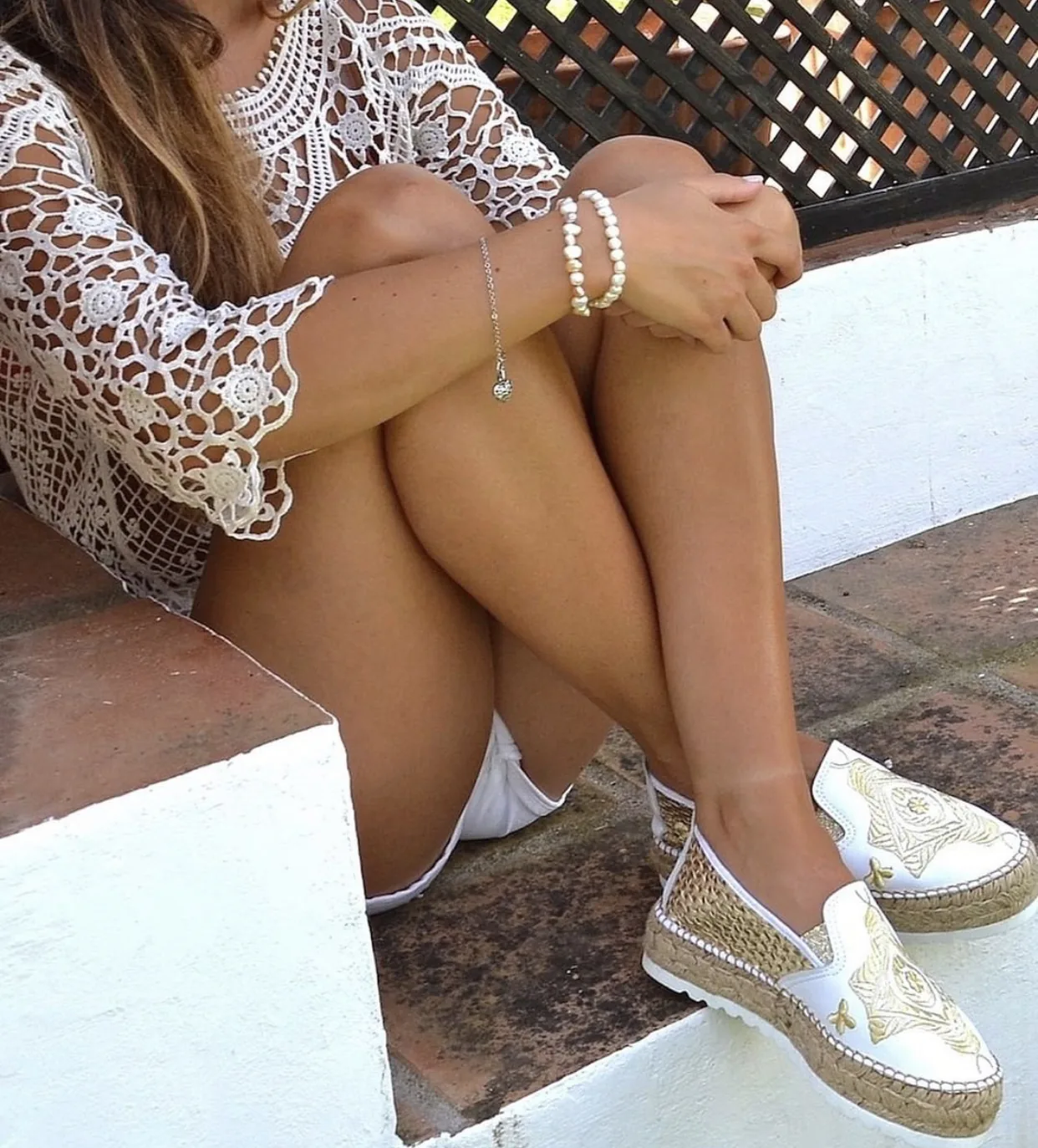
Today, we help fashion brands, boutiques and concept stores create personalised and private label espadrilles, whether they begin with one of our existing designs or need a new style developed for their project.
Already know what you want? We can look at how to make it happen. Still at the idea stage? We can start by exploring the available designs, materials and personalisation options together.
Would you like to create an espadrille collection for your brand, even in a small batch? Tell us about your project. We can discuss the possibilities and see what would work for your brand.