How to Choose an Espadrille Manufacturer in Spain
To choose an espadrille manufacturer in Spain, check who carries out each stage, whether they offer private label, their minimum quantities, how samples work and how lead times are set. Here are the questions to ask before you commit.
Choosing an espadrille manufacturer is about more than comparing prices. A workshop that makes the shoes, a brand that sells its own designs and an intermediary that coordinates production are very different things. Here are the points to check before you commit, and how we answer each of them at Atelier COSTÀ.
Who carries out each stage: the workshop, the brand or an intermediary?
The first question is simple: who does what? An espadrille involves several crafts: the jute sole, pattern-making, cutting, preparing the upper, hand-stitching and finishing. Some manufacturers bring several stages together; others work with specialist workshops.
Neither set-up is better in itself. What matters is that you are told clearly how the project is organised and who is responsible for the result.
At Atelier COSTÀ, we have worked for more than ten years with small artisan workshops in Spain. We know what each one does best, we know which to turn to for each type of design, and we coordinate the different crafts through to the finished collection.
Do they offer private label?
Some houses sell only their own collections. Others develop designs for third-party brands. If you want to sell espadrilles under your own name, ask from the start whether the label, materials and finishes can be customised.
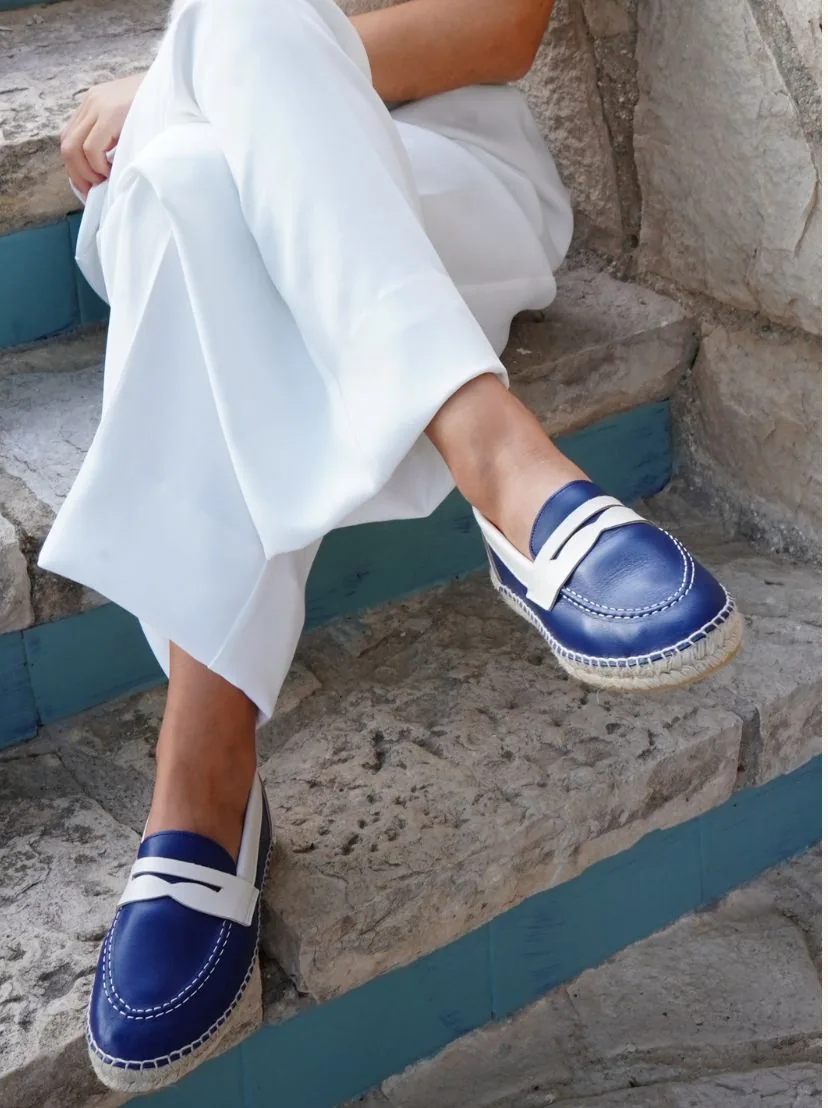
That is the principle of private label: a collection made by someone else and sold under your brand. With us, you start from an Atelier COSTÀ design and make it your own: materials, colours, braids, finishes and label.
Existing design or specific development?
Starting from a design whose pattern already exists avoids the cost of creating a new shape and much of the fine-tuning that goes with it. A completely new design takes more time and involves development costs. A good manufacturer explains both options before you begin.
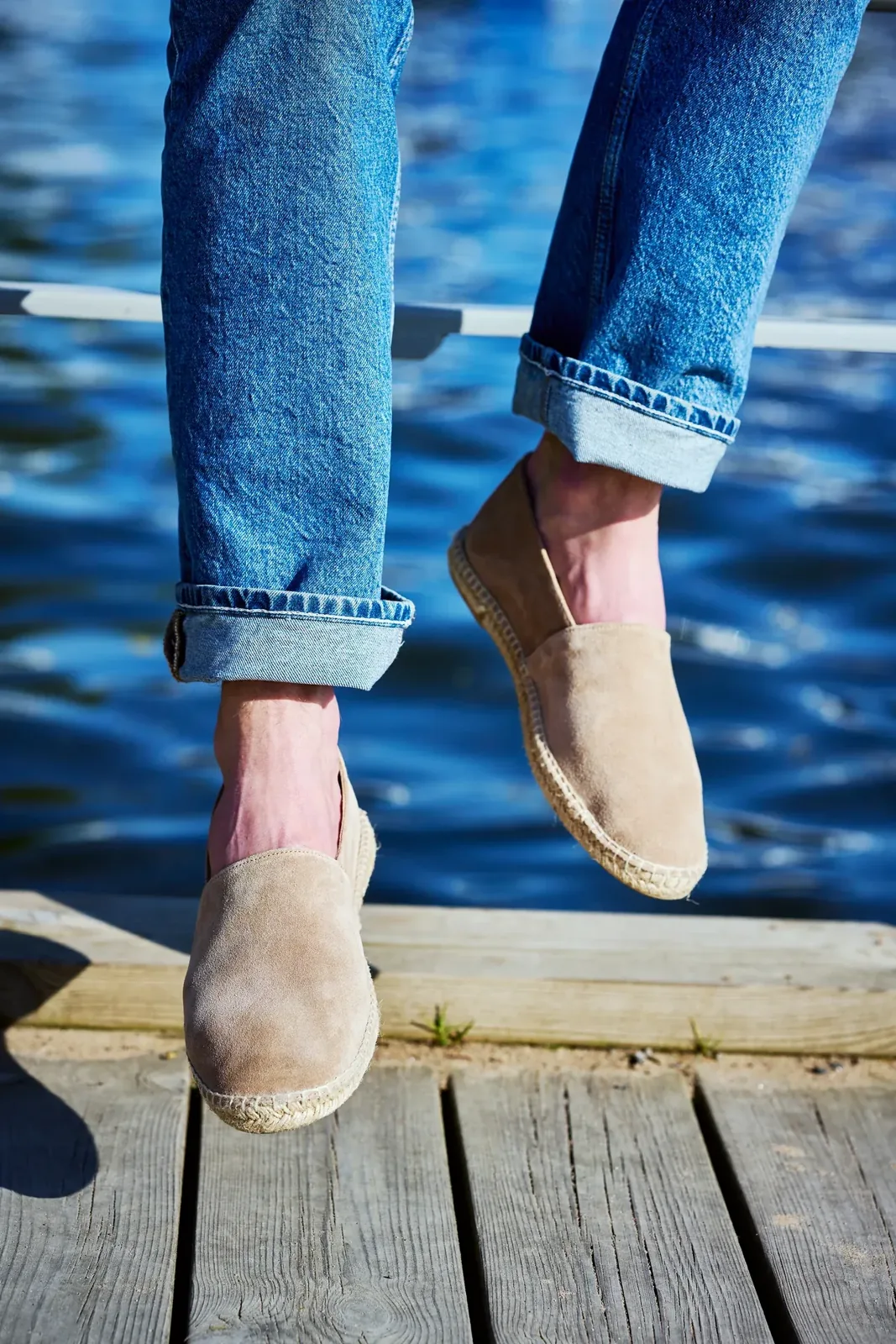
At Atelier COSTÀ, we make footwear for both women and men: classic espadrilles, wedges, Mary Janes, mules, loafers and, for winter, slippers, all with jute soles. You can browse them on our models page. Specific developments are considered depending on the project. For a detailed look at the difference, read our guide to creating an espadrille collection.
The jute sole and the stitching: what to look at
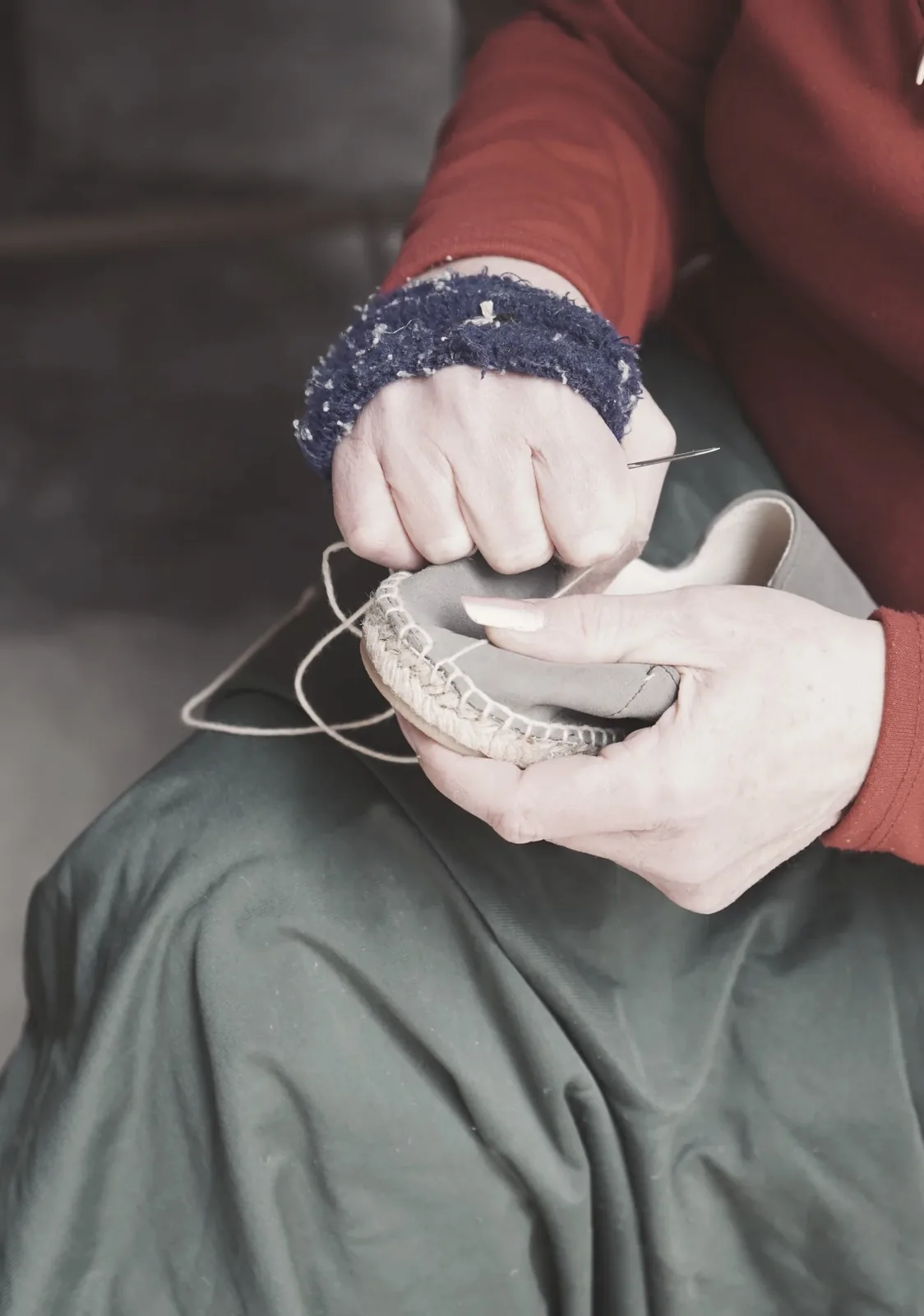
In an espadrille, the jute sole is the defining element. Ask for photos or a sample and look at how regular the braid and the stitching are. Ask too whether the stitching is done by hand, and on which designs.
At Atelier COSTÀ, jute soles are our speciality. We remain true to espadrille techniques, from braiding to stitching, with traditional hand-stitching. You will find the details in our craftsmanship.
Minimum quantities: ask straight away
Minimums vary widely from one manufacturer to another, and that is often where projects run into difficulty. Ask for precise figures: the minimum per order, the minimum per colour, and whether it can be adapted for a first collection.
At Atelier COSTÀ, a private label collection usually starts at 150 pairs, with 25 pairs per colour. For boutiques, smaller quantities can be considered under specific conditions.
Samples: what are they for, and who pays?
A sample lets you check the material, colour, proportions and finishes before production starts. Ask whether it is charged, what it covers and how it is approved.
With us, samples are charged and let you approve every detail before production. The price of a sample is not the future unit price of the collection.
Lead times: a credible lead time comes after the project is reviewed
A lead time quoted before anyone knows your project is rarely reliable: it depends on the design, the materials, the quantities and how the workshop is organised.
At Atelier COSTÀ, every collection is made to order, with no permanent stock, and the lead time is confirmed when we review your project.
Materials, label, finishes: how far can you customise?
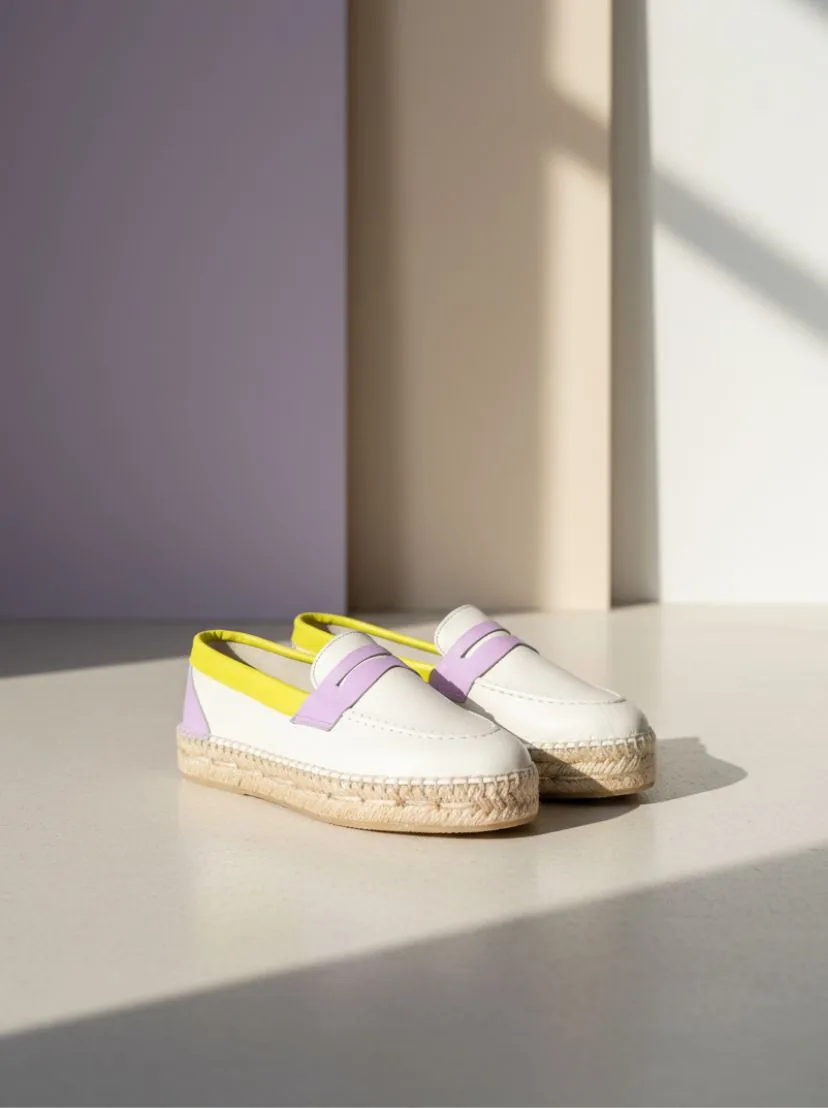
Ask which materials are available, to see the colour cards and what can be customised. Our suppliers offer canvas, linen, leather, suede and velvet, as well as certified organic cotton, certified 100% recycled fabrics and vegan alternatives to leather. We cover this in our article on materials.
Five questions to ask before you choose
- Who carries out each stage, and where?
- Can I start from an existing design? Under what conditions can a new design be developed?
- What is the minimum per order and per colour?
- Are samples charged, and what do they cover?
- How is the lead time set?
Frequently asked questions
What is the difference between private label and white label?
In practice, both terms describe a collection made by a third party and sold under your brand. At Atelier COSTÀ, you choose an existing design, then customise the materials, colours, braids, finishes and label.
Can espadrilles be made in small batches?
A private label collection usually starts at 150 pairs, with 25 pairs per colour. For boutiques, smaller quantities can be considered under specific conditions.
Do I need a technical drawing to start?
No. An idea, a few images or a material you would like to work with is enough to start a conversation. We then look together at what already exists and what can be adapted.
Why make espadrilles in Spain?
It depends on your project. For us, it is a matter of craftsmanship: the espadrille is a traditional Spanish craft, and we work with workshops we have known for more than ten years.
How do I start a project?
Tell us about your brand or store, your customers and the quantities you have in mind through the contact form. We will get back to you to review the project together.
Preparing an espadrille collection? Tell us about your project. We will review it with you.