
Dolly Wool: The Story of a Slipper Unlike Any Other
Some designs are born from a trend. Others stay, simply because they have found their place.
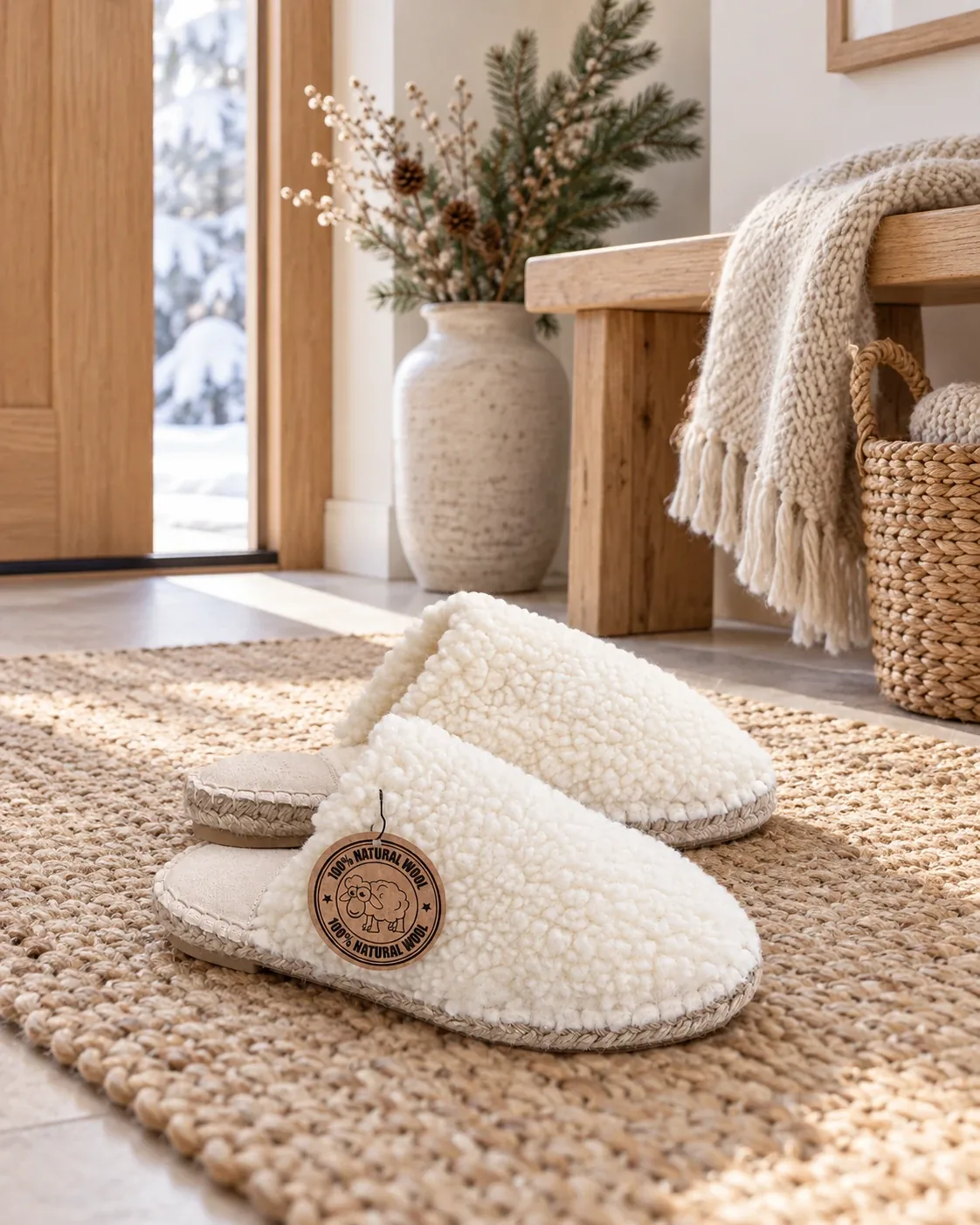
At Atelier COSTÀ, Dolly Wool belongs to the second kind.
It was the first winter slipper we ever made, more than five years ago. It has come back every season since. We have designed other models, discovered new materials and explored new ideas… and Dolly is still here.
And yet the Dolly we make today is not quite the one we started with.
Behind its apparent simplicity lie several years of observation, materials we have come to understand better, a few mistakes along the way, and a wish that never leaves us: to do things a little better whenever we can.
It all began with a wool we loved
When we first imagined Dolly, the idea was fairly simple.
A soft, warm winter slipper that felt good to wear, with that little something that would set it apart from the usual designs.
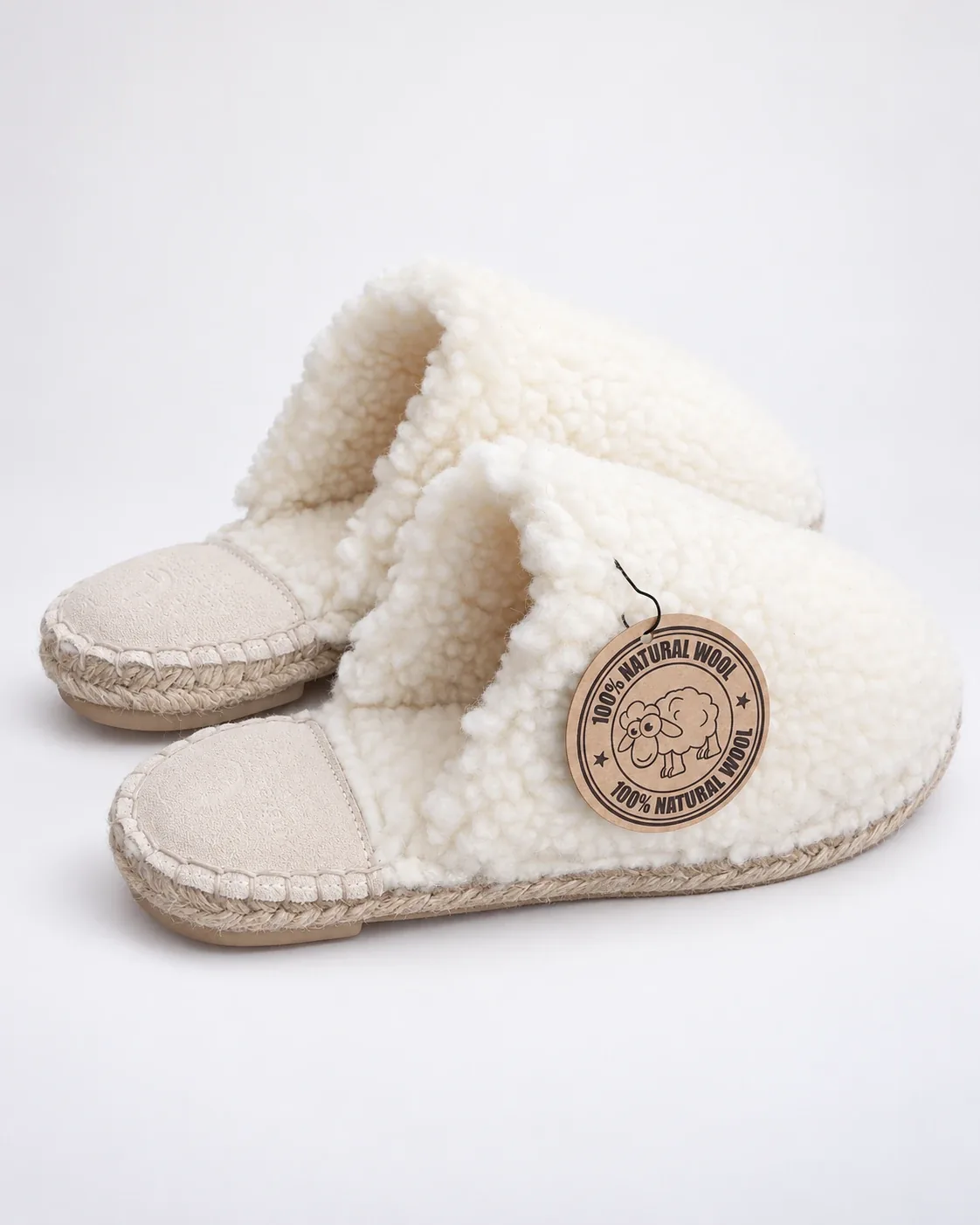
We wanted to stay true to who we are as espadrille makers: a jute sole, artisanal manufacturing in Spain and the traditional stitching that is part of our craft.
For the upper, we chose a wool that won us over with its feel and its look.
The first collection was born.
But after that first season, we began to see what we had not fully anticipated.
Inside, at the heel, the wool was subject to constant friction. Little by little, the fibres wore down, and some areas lost their lovely appearance, as if the material had thinned out.
We knew shoes, but we did not yet know how this particular wool would behave in a slipper worn every day.
I think this is something rarely told in stories about how a product is created.
People happily talk about the result. Much less about the problems they met on the way.
Yet that is often where you learn the most.
In search of a denser, softer, more durable wool
We started looking for other qualities of wool.
Not simply something prettier or more expensive. We wanted a wool that would keep its character, its thickness and its comfort despite the friction of daily wear.
We found thicker, tighter wools, with a denser texture and better structure.
It made a real difference.
The wear problem we had faced at the start was greatly reduced.
But over time, we noticed something else: even when it held up better, the wool could still flatten where the heel rests and rubs day after day.
The slipper remained comfortable. It could simply lose some of that plush look we loved so much.
And that bothered me.
Because to me, a well-designed product should not only feel good on the day you open the box. It should also be designed around the way it will actually be worn.
The small piece of leather that made all the difference
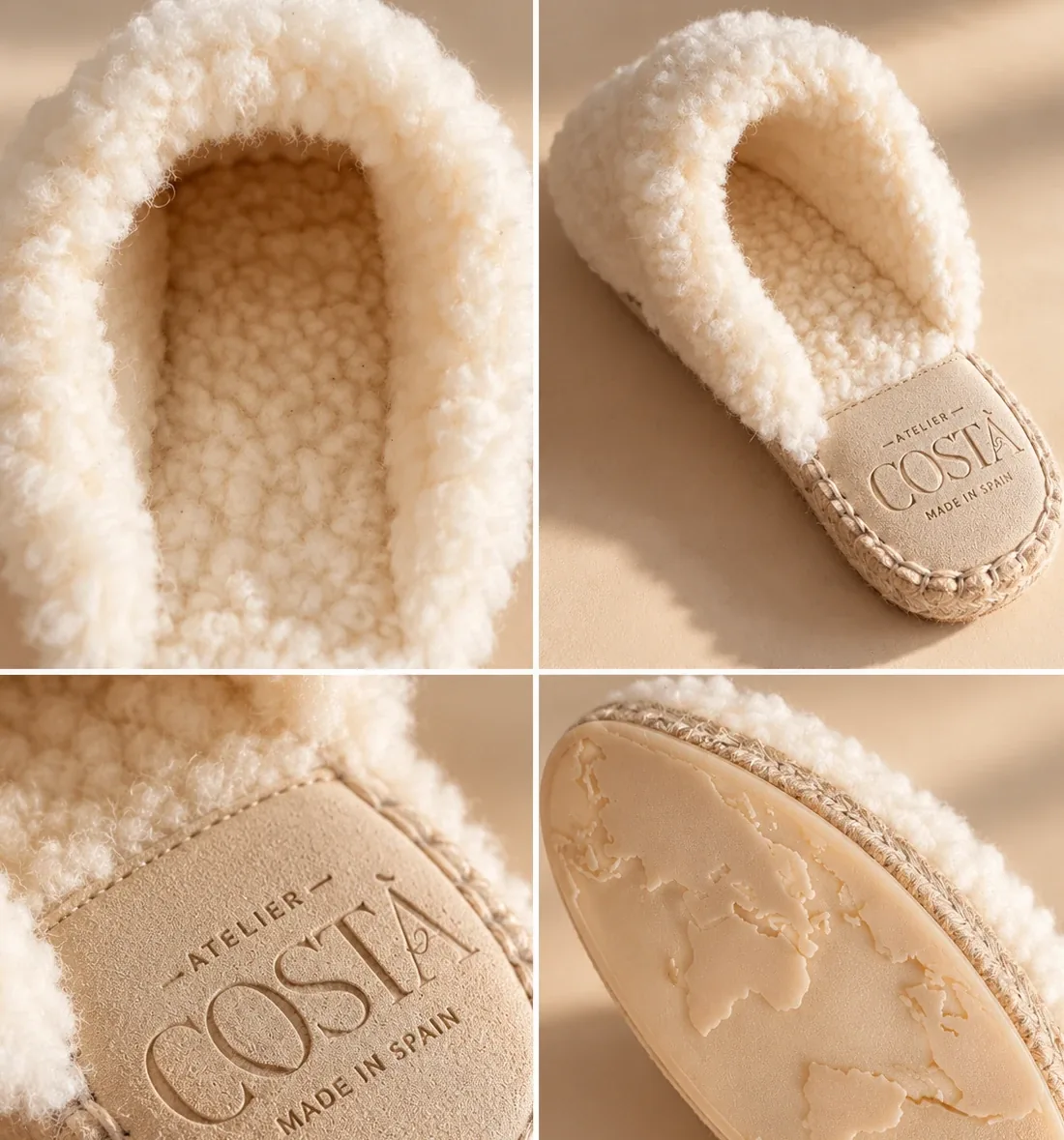
About two years ago, we decided to add a leather heel pad inside Dolly.
A detail you can barely see when you look at the slipper from the outside.
Depending on the version, we use smooth leather or suede, whose soft touch pairs particularly well with wool.
This small piece protects the area exposed to the constant rubbing of the heel. It helps preserve the look of the interior and limits wear to the wool at that spot.
It is a very simple change, in the end.
But it took several seasons to understand that it could make a real difference.
Today, when I look at Dolly, I often think about that detail.
Because it sums up the way we work quite well: observe, understand, try, then improve.
A beautiful finish is not always the one you notice at first glance. Sometimes it is the one you come to appreciate over time.
Why wool is still our material of choice for Dolly
We could have chosen a synthetic material: easy to work with, consistent, available in countless colours.
But that was not what we were looking for.
I love natural materials for their feel, their character and the sensation they give.
In our shoes, leather plays an important role. For our winter slippers, wool is the material we want to come back to.
It has qualities you appreciate most when it sits right against your foot.
Wool is naturally breathable. Its fibres can absorb some water vapour and release it gradually, which adds to a feeling of comfort.
It brings warmth without simply closing the foot in.
But beyond these properties, what matters most is how it feels when you slip Dolly on.
The softness, the touch of the material, that feeling of being at home.
It is hard to describe without holding the slipper in your hands.
And that is exactly why the choice of wool matters so much.
The comfort you cannot see
There is another detail we have always cared about.
It is under your foot.
For Dolly, we do not use a basic layer of standard foam. We choose a particularly thick, generous memory foam.
We place it carefully within the insole construction, then add the wool insole on top.
The aim is simple: that soft, welcoming feel you notice straight away, and that stays with you through the day.
This choice adds an extra step to the making.
It is one of those decisions that hardly show in a product photo.
Yet once you wear the slippers, you feel the difference.
It is something I care about deeply.
I have always believed a shoe should never make us choose between the pleasure of looking at it and the pleasure of wearing it.
What hands bring to a slipper
You might imagine an indoor slipper is a fairly simple thing to make.
After all, it looks less complex than a dress shoe.
But behind Dolly lies a whole sequence of skills and gestures.
Preparing the components. Working the sole. Placing the memory foam. Fitting the wool insole. Positioning the upper and joining it to the sole.
And then comes one of the gestures we are most attached to: the traditional espadrille stitch, sewn by hand all the way around the shoe.
Stitch by stitch, the upper is joined to the jute sole.
This stitching is part of Atelier COSTÀ’s identity.
We work with specialist artisans and workshops in Spain, each bringing their own expertise to different stages of production.
None of this comes down to a machine that turns out a finished slipper.
The making takes handling, attention, knowledge of the materials, and time.
There is something I find very beautiful in this: even an object as everyday as a slipper can carry the mark of a real craft.
Jute, a signature we have never given up
Dolly is a winter slipper, but in its construction it remains deeply rooted in the world of the espadrille.
The jute sole connects us to that tradition.
This plant fibre has a texture, a relief and a character that fully synthetic materials do not reproduce in the same way.
Above all, it allows us to keep our traditional hand stitching.
It is a choice we hold on to, even though a more standardised process would no doubt be simpler.
We are not trying to make an ordinary slipper with a few decorative touches to give it a handcrafted look.
On the contrary, we start from a construction and a craft that genuinely exist.
That is where the difference lies.
In the materials, in the gestures, and in the way each pair takes shape.
A question we are often asked: can you wash Dolly?
For a long time, this question surprised me.
To me, a jute sole and a washing machine have never really been a good match.
But today I understand why people ask so often.
We have grown used to living surrounded by shoes and objects made from very different materials, some entirely synthetic. It has become natural to think a slipper can be washed like a piece of clothing.
With Dolly, you simply need to know the materials you are holding.
Wool, leather and jute do not need the same care.
The jute sole, in particular, should never be soaked. Immersion or machine washing could affect the shape and structure of the slipper.
To care for Dolly, we recommend airing it regularly, gently removing dust with a soft brush and, if needed, spot-cleaning small marks with care, without soaking the material.
It is another way of looking at the objects that share our daily lives.
You get to know their materials, understand their qualities and learn to look after them.
And in the end, it is not such a strange requirement when you choose a handcrafted product.
What you really give with a pair of Dolly Wool
I think about this often, especially as winter and the holidays draw near.
When someone gives a pair of slippers, what are they really giving?
With Dolly, I like to think the gift goes a little further.
Of course, you give softness, comfort and something lovely for the moments spent at home.
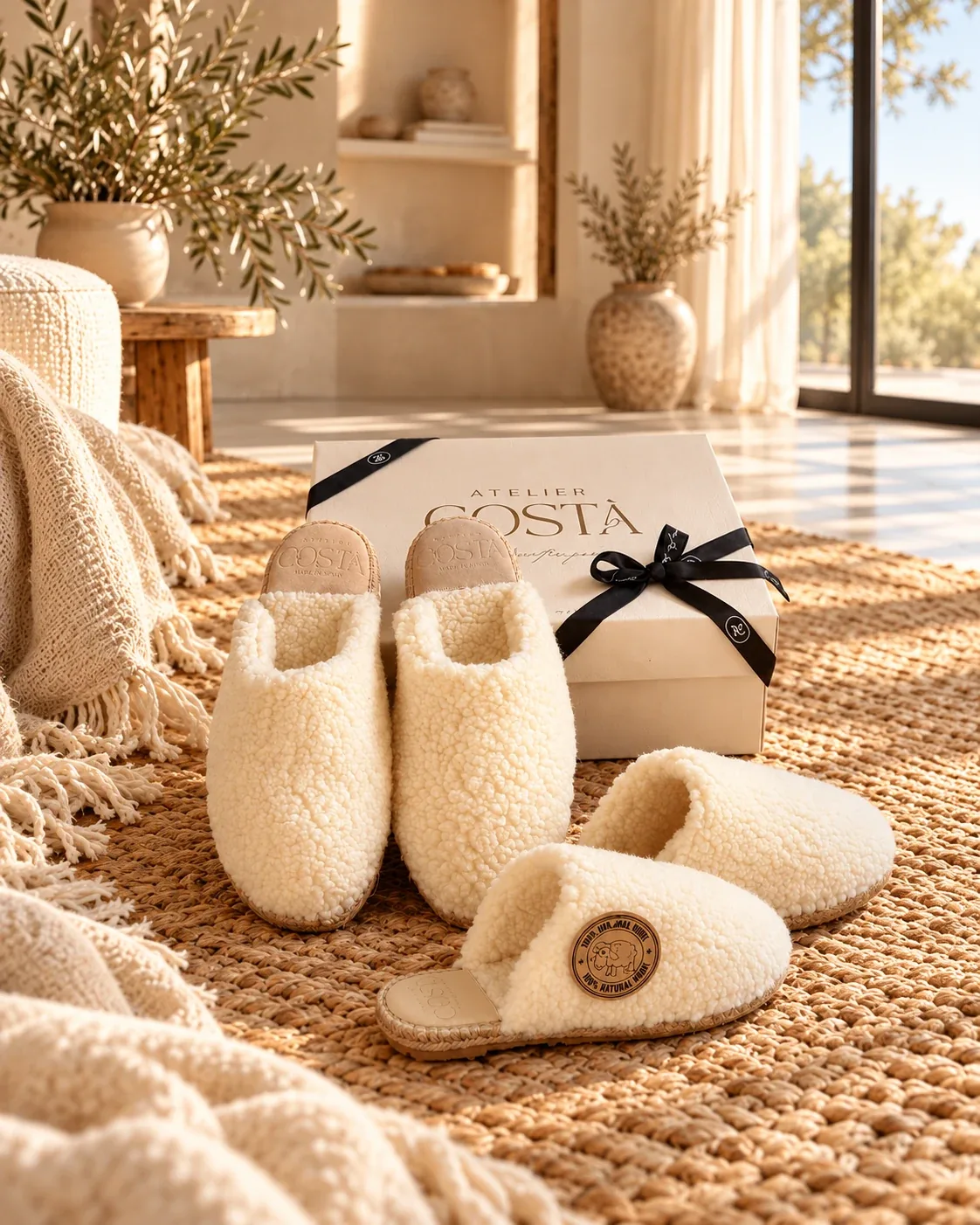
But you also give a carefully chosen material, a design we have learned to improve over the years, a jute sole and stitching done by hand.
You give a small piece of Spanish craftsmanship.
And behind this object are the people who made it, precise gestures, sometimes invisible decisions, and time devoted to every pair.
That kind of value is not measured by price alone.
I like the idea that a gift can be simple, useful and meaningful all at once.
That it does not have to be spectacular to be precious.
Perhaps that is exactly what Dolly is.
An everyday object with far more to tell than you might imagine.
For a boutique, another story to tell
When we present Dolly Wool to a boutique, I would like people to see more than a pretty wool slipper.
I would like them to be able to tell what lies behind it.
Why we chose this material. Why we reinforced the heel. Why we use a generous memory foam. And why we still care so much about traditional stitching done by hand.
These are details a boutique can share with its customers.
They help explain what sets Dolly apart from a more standardised slipper.
For a boutique that loves to offer distinctive pieces, it is a story worth passing on.
It is also one of the reasons we keep a selection of Dolly Wool available for our professional partners.
We like giving them the chance to discover the model, offer it to their customers and see how it finds its place in their world.
Without necessarily starting by imagining a whole new collection.
Five winters on, the same desire
Today, Dolly Wool is one of our best-loved models.
It appeals to people of all ages, carries on from season to season and fits naturally into very different worlds.
We keep making it every winter.
Not because we have run out of new ideas.
But because some ideas simply deserve to be kept, improved and passed on.
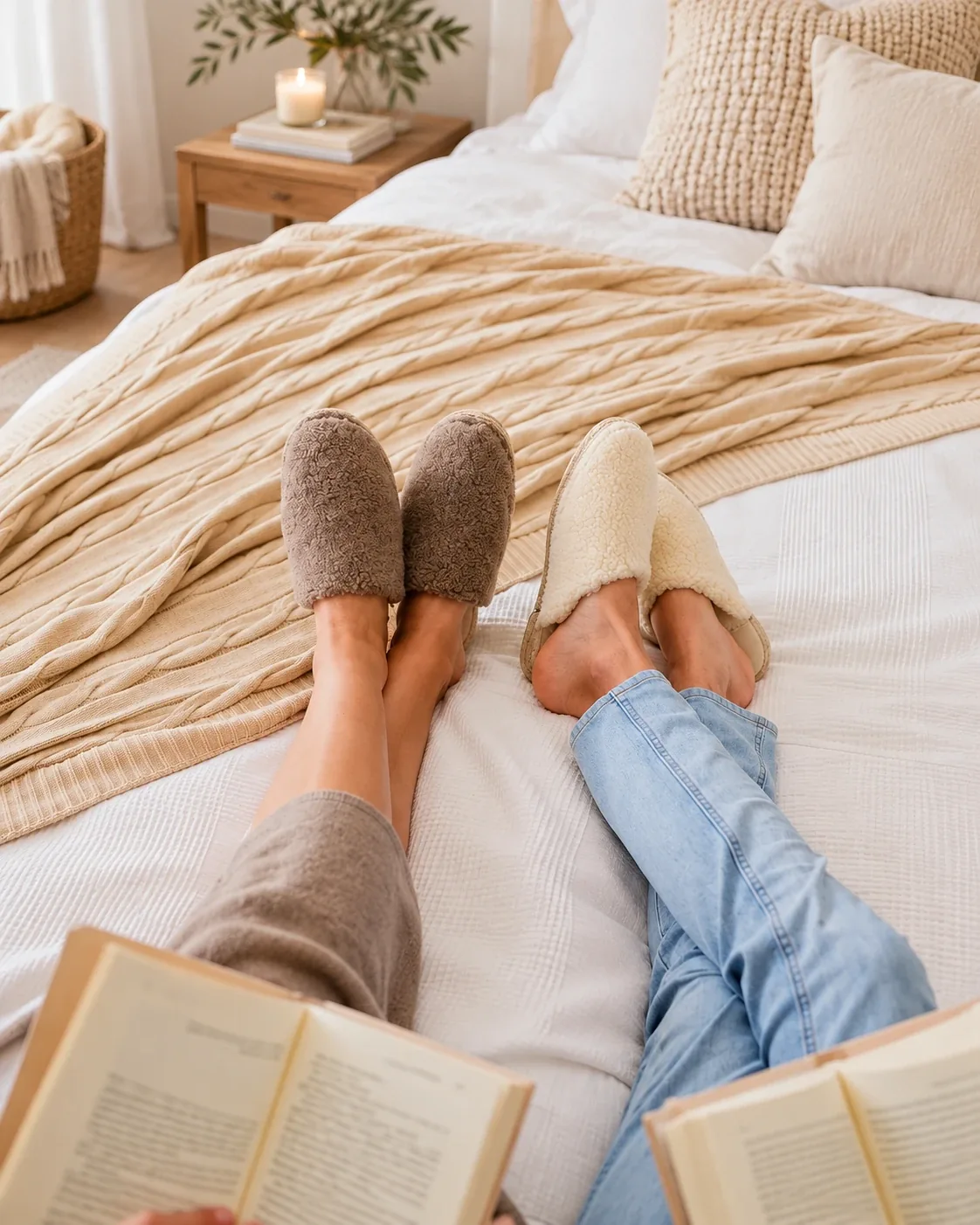
When I think back to the first version, to that wool that wore out too quickly, to the new materials we searched for and to the small heel pad that ended up changing so much, I tell myself that this may be the most interesting part of what we do.
A model is never just a drawing.
It is a story that keeps being written, pair after pair.
A story by the founder of Atelier COSTÀ
Do you have a boutique or a collection in mind?
Explore our models for your boutique, our craftsmanship and the possibilities of a private label collaboration with Atelier COSTÀ. We would be delighted to talk about your project.