
In a World That Moves So Fast, Why Are Espadrilles Still Sewn by Hand?
Sometimes I wonder how shoes that require so many steps, so many skilled movements and so much time to make can still exist today.
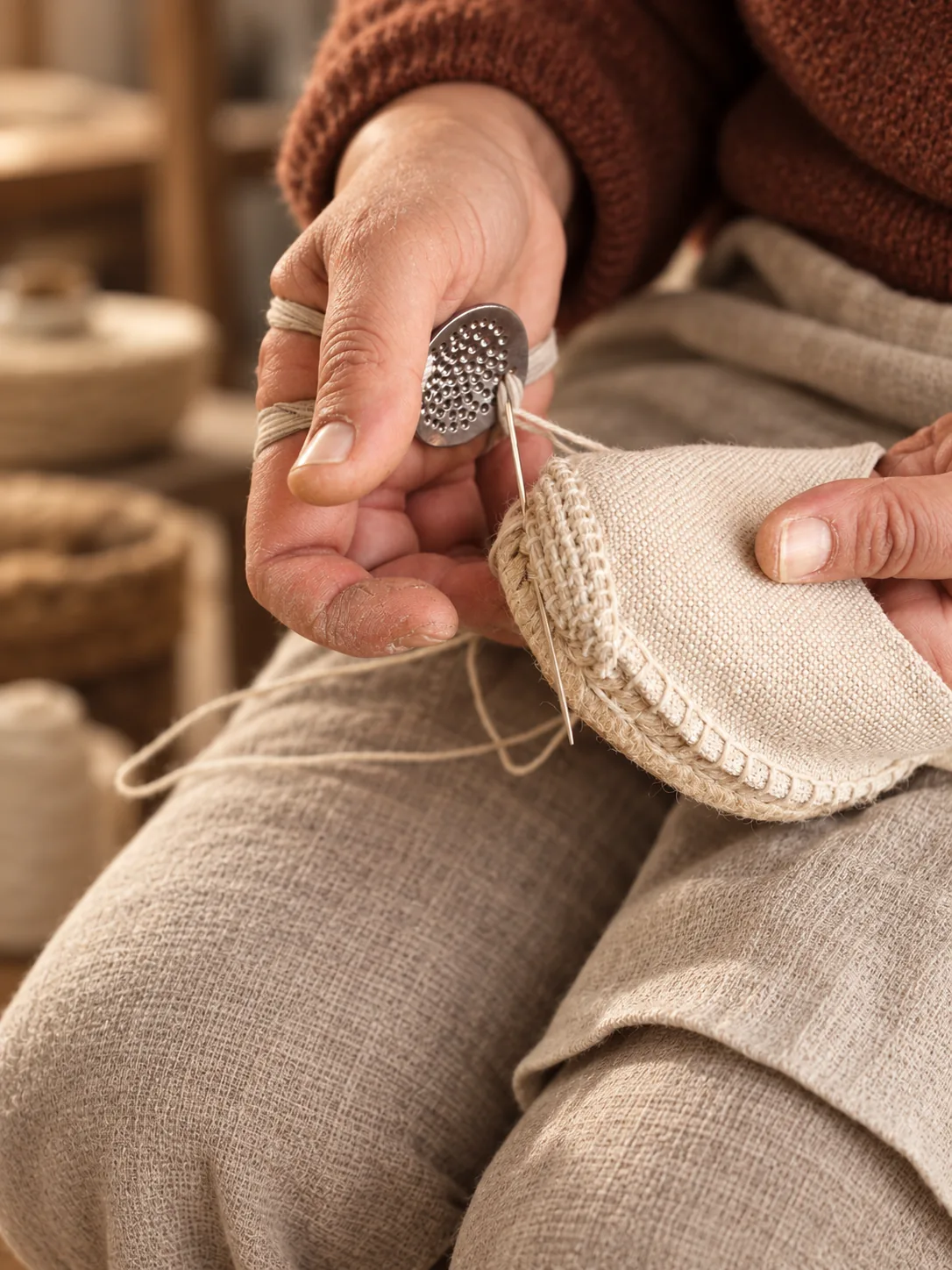
We live in a world where everything is expected to be produced faster, in greater quantities and with less and less human involvement.
And yet, in Spain, there are still artisans who sew espadrilles by hand. They have practised these techniques for years, carrying on skills passed down from one generation to the next.
I have been working with these artisans for more than ten years, and what moves me most is not simply the finished shoe. It is everything that went into making it.
Sometimes I wonder what we would lose if these crafts were to disappear.
The Time We Never See
When we look at a pair of espadrilles in a boutique, we notice their shape, colour and material. We try them on, appreciate their comfort and imagine what we might wear them with.
We rarely think about all the hands involved in making them.
The people who prepare the materials, those who cut the different pieces, those who assemble the shoe, and those who carry out that distinctive stitching that joins the upper to the jute sole.
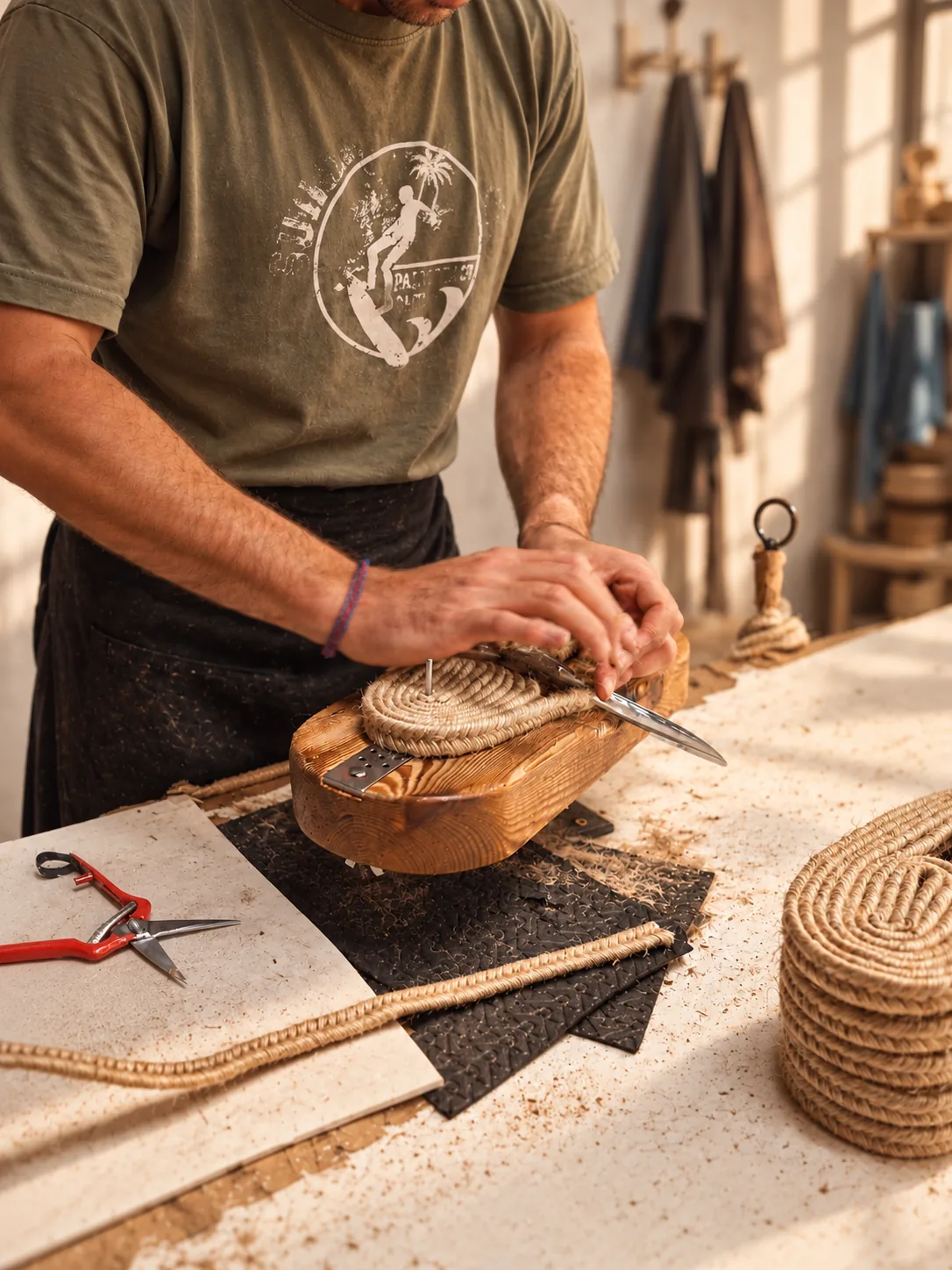
Every stage requires care and attention. Some movements may look simple when you watch an artisan at work, yet they often take years to master.
And perhaps this is what fascinates me most: at a time when we are constantly trying to save time, there are still crafts that require us to take the time to learn them properly.
The Perfection of a Machine or the Hand of an Artisan?
We are living in the age of artificial intelligence and ever-increasing automation. Machines capable of sewing espadrilles with remarkable consistency already exist.
But is that really what we are looking for in a handcrafted espadrille?
Personally, I believe we are looking for something else. We like knowing that someone has held that shoe in their hands, passed the needle through it, pulled the thread and made every stitch, one after another.
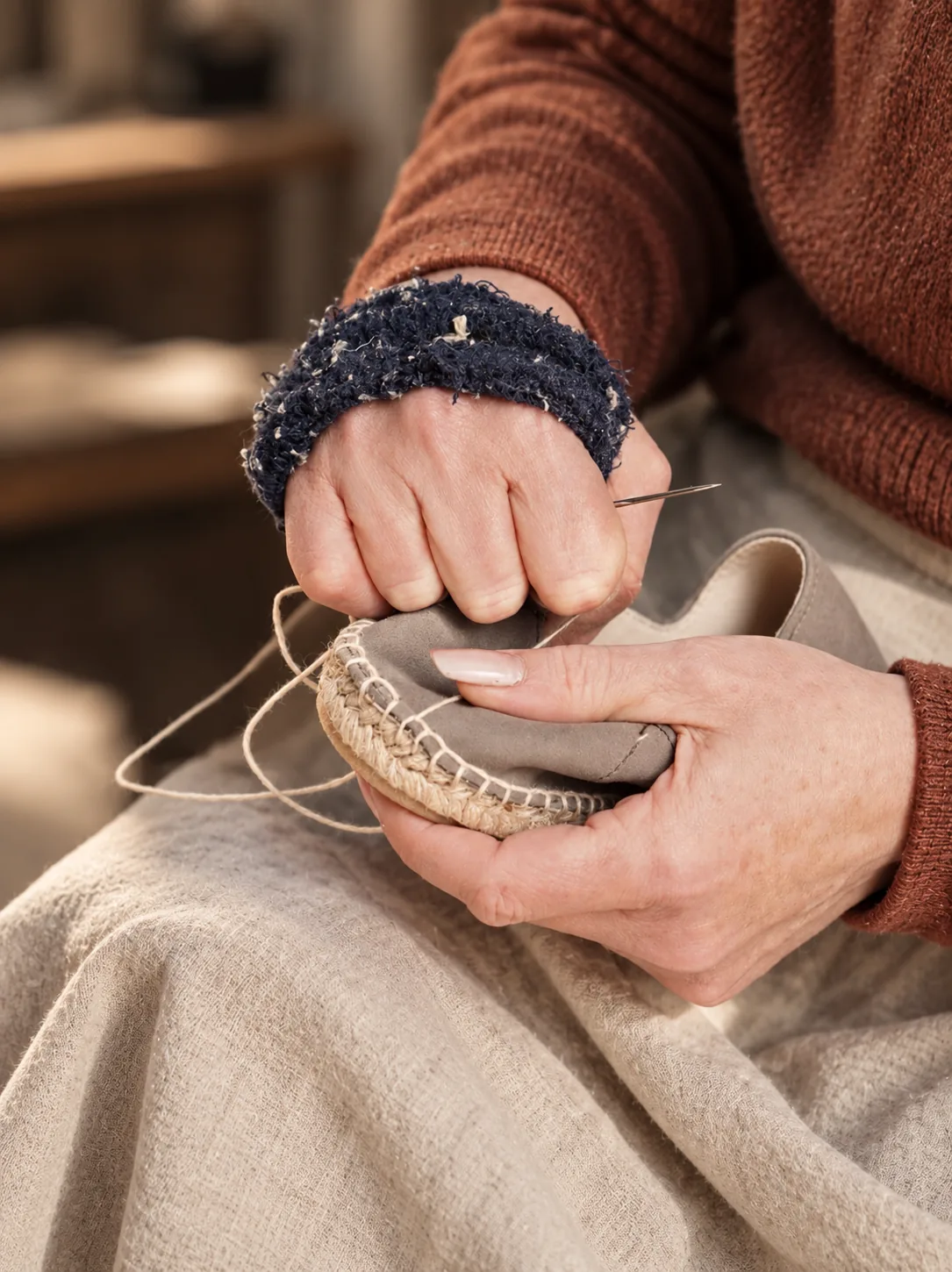
And sometimes, the smallest irregularity reminds us of that.
A tiny detail that might appear to be a flaw can sometimes be a sign of authenticity. Not a defect in quality, but a subtle trace of the human hand.
Perhaps that is where a certain idea of luxury begins.
And yet, I have seen espadrilles sewn by hand with extraordinary precision. Stitches perfectly aligned, seams so regular that you can hardly believe they were made without a machine.
That is when you truly appreciate the skill of the artisan.
A machine-stitched espadrille does not have quite the same appearance. The thread, the stitches, the way the upper meets the jute sole: for someone familiar with this craft, the difference is noticeable.
And when I wear a hand-sewn espadrille, I also like knowing that it has been assembled using a traditional craft technique.
So, in a world where technology can already reproduce so many things, I find myself asking another question:
What if true luxury today were simply knowing that someone took the time to make something with their own hands?
An Age-Old Craft, Shoes for Today
What I also find remarkable about espadrilles is their ability to evolve without losing their identity.
They are no longer just the traditional summer shoes once associated with holidays and warm weather.
Today, the same hand-stitching technique can be used to create very different styles: Mary Janes, loafers, shoes made from leather, velvet or wool.
Shapes change. Materials evolve. Tastes change too.
But at the heart of their making, that traditional handcraft remains.
I particularly love this meeting between an age-old technique and contemporary design. It shows that preserving a tradition does not mean remaining in the past.
Quite the opposite. It means allowing that tradition to continue living.
What We Risk Losing
I often think about how these crafts are passed on.
Traditional skills cannot be preserved simply through books or videos. They are passed down through practice, observation, correction and all those small details that only experience can teach.
If younger generations no longer find a reason to learn these techniques, what will become of them?
I do not know what place these crafts will have in twenty or thirty years. I simply hope we will continue to make room for them.
Not because we should reject progress or technology, but because not everything necessarily needs to be replaced by a machine.
Some objects hold a particular value precisely because they carry within them the time, experience and work of the people who made them.
Holding On to What Matters
In a world that is constantly changing, I like to think that certain crafts remain points of reference.
They remind us that behind an object, there can still be a story, people, gestures and a tradition that continues to be passed on.
I do not pretend that a pair of hand-sewn espadrilles will change the world.
But I believe that by continuing to design, make and choose these products, we each contribute, in our own small way, to keeping alive crafts that deserve not to disappear.
And perhaps that is one of the reasons why, after all these years, I remain so attached to this particular shoe.
Because it reminds us that not everything of value needs to be made faster.
A reflection by the founder of Atelier COSTÀ